
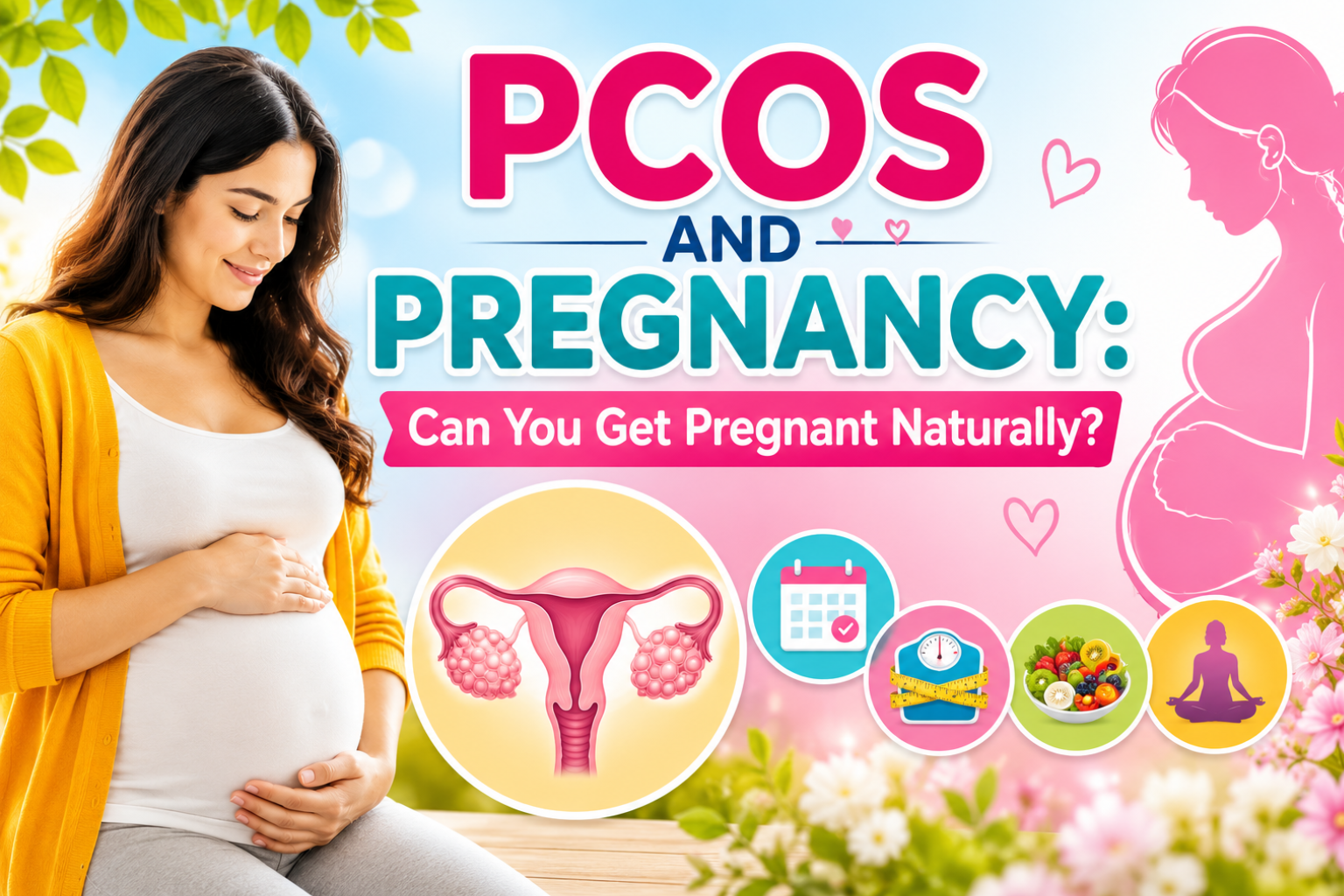
PCOS and Pregnancy: Can You Get Pregnant Naturally with PCOS?
Polycystic Ovary Syndrome — PCOS — is the most common hormonal condition affecting women of reproductive age in India, and it is the leading cause of ovulatory infertility. If you have been diagnosed with PCOS and are hoping to get pregnant, you are not alone — and importantly, you have real, effective options.
Dr. Durga Vytla, a fertility specialist based in Gachibowli, Hyderabad, works with PCOS patients every day. This guide covers everything you need to know — from how PCOS affects fertility, to what treatments work, to when IVF becomes the right step.
What Is PCOS and How Common Is It?
PCOS is a hormonal disorder in which the ovaries produce excess androgens (male hormones) and fail to release eggs regularly. Instead of a single dominant follicle maturing and releasing an egg each month, multiple small follicles develop but none fully matures — leading to irregular or absent ovulation.
In India, PCOS is estimated to affect between 10 and 20 percent of women of reproductive age. Among women presenting to fertility clinics in cities like Hyderabad, the proportion is even higher. It is also the condition most commonly associated with irregular periods, excess hair growth, acne, and weight gain around the abdomen.
Does PCOS Mean You Cannot Get Pregnant?
No — and this is the most important thing to understand. PCOS does not mean infertility. It means irregular ovulation, and irregular ovulation is treatable.
Many women with PCOS do get pregnant naturally — especially those with mild symptoms, healthy weight, and no other fertility factors. However, the unpredictability of ovulation makes it harder to time intercourse and reduces monthly conception chances. For women who are actively trying to conceive without success, medical support to restore regular ovulation significantly improves the outlook.
How Does PCOS Affect Your Chances of Getting Pregnant?
1. Irregular or Absent Ovulation
Without regular ovulation, there are fewer opportunities each year for an egg to be fertilised. A woman who ovulates 12 times a year has 12 chances at conception. A woman with PCOS may ovulate only 3 to 6 times a year — cutting the natural conception window significantly.
2. Hormonal Imbalance
Elevated LH (Luteinising Hormone) relative to FSH (Follicle Stimulating Hormone) is a hallmark of PCOS. This imbalance can affect egg quality and the uterine lining's readiness to receive an embryo — even when ovulation does occur.
3. Insulin Resistance
Up to 70 percent of women with PCOS have some degree of insulin resistance, which disrupts the hormonal signals that regulate ovulation. Insulin resistance also increases the risk of gestational diabetes during pregnancy — meaning monitoring during pregnancy is important even after conception.
4. Higher Miscarriage Risk
Some studies suggest that women with PCOS have a slightly elevated risk of early miscarriage, particularly when insulin resistance and elevated LH levels are uncontrolled. Managing these factors before and during early pregnancy is part of comprehensive PCOS fertility care.
PCOS Fertility Treatment Options in Hyderabad
Lifestyle Modification — The First Line
For women with PCOS who are overweight, even a 5 to 10 percent reduction in body weight can restore spontaneous ovulation and significantly improve fertility outcomes. Lifestyle changes — including a low glycaemic index diet, regular moderate exercise, and stress management — are not just supplementary advice. They are clinically proven first-line interventions that can result in natural pregnancy without any medication.
Ovulation Induction with Letrozole or Clomiphene
When lifestyle changes alone are insufficient, ovulation induction is the next step. Medications like Letrozole (preferred for PCOS) or Clomiphene Citrate are used to stimulate the ovaries to produce and release a single, mature egg. These are taken orally for 5 days at the start of the cycle and are monitored with ultrasound scans to confirm follicle development and ovulation.
Ovulation induction is often combined with timed intercourse (OI-TI) or Intrauterine Insemination (IUI). Success rates with ovulation induction range from 15 to 25 percent per cycle, depending on the woman's age and other factors.
IUI — Intrauterine Insemination
IUI is a simple procedure in which processed sperm is placed directly into the uterus around the time of ovulation, increasing the number of sperm that reach the egg. It is appropriate for PCOS patients who respond well to ovulation induction but have not conceived after several cycles of timed intercourse. Dr. Durga Vytla typically recommends 3 cycles of IUI before reassessing the treatment plan.
IVF for PCOS
IVF is recommended for PCOS patients when ovulation induction has failed, when there are additional fertility factors (such as tube problems or male factor), or when the patient is above 35 and time is a consideration. Women with PCOS actually tend to respond well to IVF stimulation — producing a good number of eggs — though they need careful monitoring to avoid Ovarian Hyperstimulation Syndrome (OHSS).
Dr. Durga Vytla uses a tailored stimulation protocol for PCOS patients undergoing IVF, using low and slow dosing strategies with frequent monitoring to maximise egg quality while minimising OHSS risk. A freeze-all strategy — freezing all embryos and doing a frozen embryo transfer in a subsequent cycle — is often recommended for PCOS patients to eliminate the OHSS risk entirely.
PCOS and IVF Success Rates in Hyderabad
Women with PCOS generally have IVF success rates comparable to or higher than the general infertile population for their age group, because ovarian reserve is typically well-maintained. The primary challenge is not egg number but egg quality and cycle management. With experienced fertility care in Hyderabad, good outcomes are very achievable — particularly for women under 35.
What Should You Do If You Have PCOS and Want to Get Pregnant?
- See a fertility specialist — not just a gynaecologist — for a targeted PCOS fertility evaluation
- Get a hormone panel done on Day 2 or 3 of your cycle: FSH, LH, AMH, Prolactin, Testosterone, Thyroid
- Get a pelvic ultrasound to assess ovarian morphology and antral follicle count
- Ask your partner to get a semen analysis done — male factor can coexist with PCOS
- Start lifestyle modifications immediately — these improve every fertility treatment outcome
- Do not delay beyond 6 to 12 months of trying without results — time matters
Book a Consultation
If you have PCOS and are trying to conceive in Hyderabad, book a consultation with Dr. Durga Vytla in Gachibowli. A personalised evaluation is the first step toward a clear, actionable plan.
Frequently Asked Questions
Yes, many women with PCOS conceive naturally, especially with lifestyle changes that restore regular ovulation. However, if you have been trying for 12 months without success (or 6 months if over 35), seeking fertility evaluation is advised.
PCOS does not resolve after pregnancy — it is a lifelong hormonal condition. However, symptoms may improve, and pregnancy itself does not worsen the underlying condition.
IVF for PCOS patients requires careful monitoring to avoid overstimulation, but outcomes are generally good. With the right protocol, PCOS should not be a barrier to a successful IVF cycle.
Dr. Durga Vytla, a fertility specialist in Gachibowli, Hyderabad, specialises in PCOS management and fertility treatment. A consultation will help map out the right treatment path for your specific case.
