Visit our Location
Continental Fertility Center,Financial District, Gachibowli
Opening Hours
Monday - Saturday: 9:00 AM - 4:00 PM

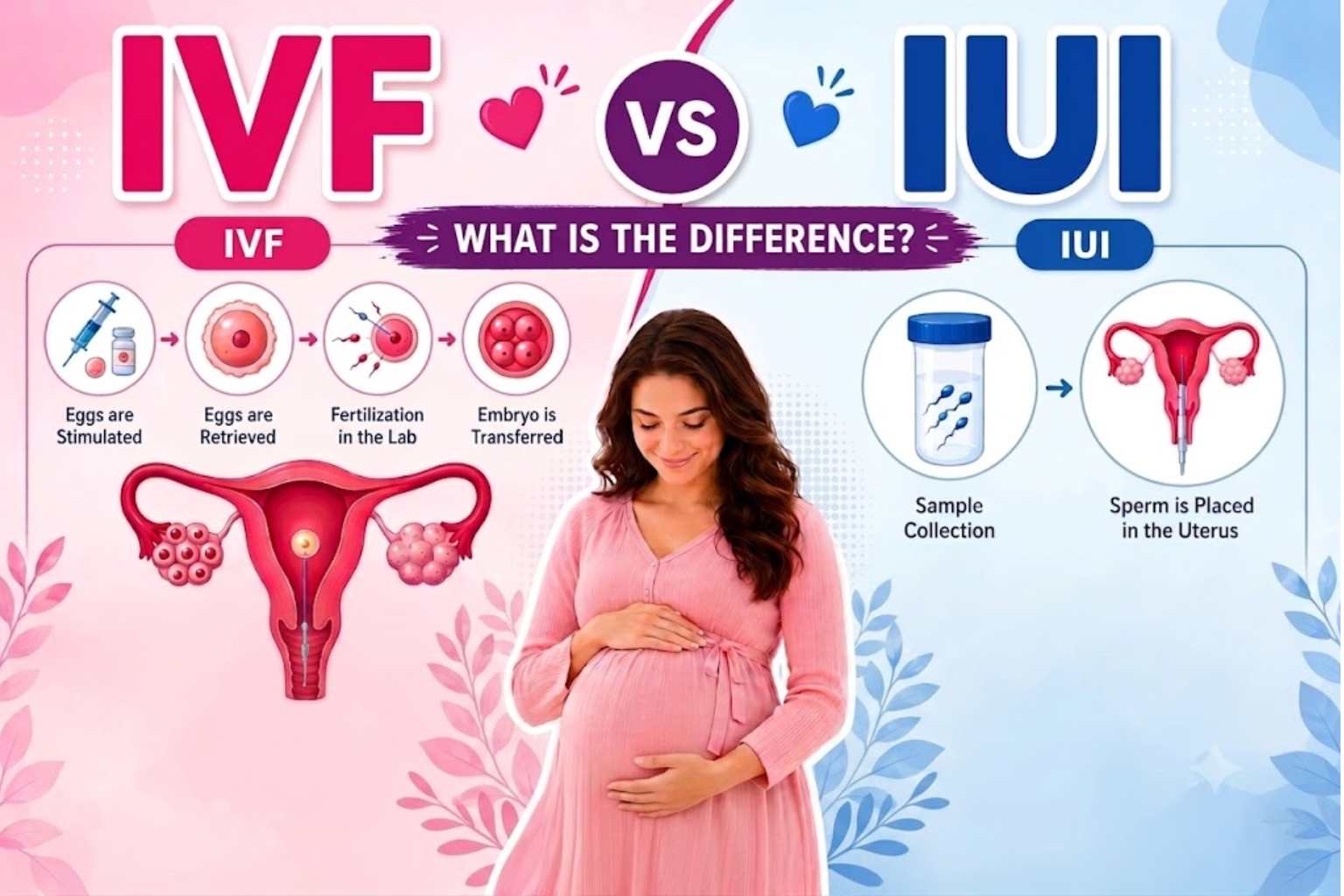
IVF vs IUI — What Is the Difference and Which One Is Right for You?

Two of the most common fertility treatments are IUI and IVF — and they are often confused. Patients frequently come to Dr. Durga Vytla's clinic in Gachibowli, Hyderabad, having been advised one or the other without fully understanding the difference, why one was chosen over the other, or whether that recommendation was appropriate for their case.

This guide explains both treatments clearly, compares them directly, and helps you understand which one might be right for you.


What Is IUI — Intrauterine Insemination?

IUI is a procedure in which a laboratory-processed sperm sample is placed directly inside the uterus using a thin, flexible catheter — at the time of ovulation. The goal is to shorten the distance the sperm has to travel to reach the egg and increase the number of motile sperm in the right location at the right time.

IUI can be done in a natural cycle (without medications) or in a stimulated cycle (with oral medications or low-dose injections to stimulate one or two follicles). The procedure itself takes only a few minutes, is generally painless, and requires no anaesthesia. The woman can go home immediately afterward.


What Is IVF — In Vitro Fertilisation?

IVF is a more complex assisted reproduction procedure. The woman's ovaries are stimulated with injectable hormones to produce multiple eggs. These eggs are retrieved under sedation in a short procedure, fertilised with sperm in a laboratory, and the resulting embryos are cultured for 3 to 5 days. The best-quality embryo is then transferred into the uterus. Additional embryos can be frozen for future use.

IVF takes 4 to 6 weeks from the start of stimulation to the result of a pregnancy test. It involves daily injections, regular monitoring scans, an egg retrieval procedure, and careful laboratory work.


IVF vs IUI — A Direct Comparison

Feature IUI IVF
Fertilisation location Inside the body (in vivo) Outside the body, in a laboratory (in vitro)
Invasiveness Minimal — no anaesthesia Moderate — sedation for egg retrieval
Cost per cycle Rs. 7,000 to Rs. 16,000 (approx.) Rs. 1,10,000 to Rs. 1,90,000+ (approx.)
Duration 1 to 2 weeks per cycle 4 to 6 weeks per cycle
Success rate per cycle 10 to 20% 35 to 55% (under 35)
Number of embryos No control — natural conception Multiple embryos possible; extra can be frozen
Suitable for Mild male factor, unexplained infertility, PCOS Blocked tubes, severe male factor, low reserve, failed IUI


Who Is IUI Best Suited For?

IUI is a good first-line treatment for couples where:

  •       The woman has at least one open fallopian tube
  •       The cause of infertility is unexplained
  •       There is mild male factor infertility — low count or motility, but not severely so
  •       The woman has PCOS with good ovarian reserve who responds to ovulation induction
  •       The couple has been trying for under 3 years and the woman is under 35
  •       Single women or same-sex couples using donor sperm

IUI is not recommended if the woman has blocked fallopian tubes, very low ovarian reserve, or if there is severe male factor infertility. In these cases, the sperm and egg cannot meet even with insemination, and IVF is the more appropriate starting point.


Who Needs IVF Directly?

Dr. Durga Vytla advises proceeding directly to IVF — without attempting IUI — in the following situations:

  •       Both fallopian tubes are blocked or absent
  •       Severe male factor infertility requiring ICSI
  •       Low or diminished ovarian reserve — every egg counts and should not be left to chance
  •       Previous failed IUI cycles (typically 3 or more)
  •       Woman is above 38 — IUI takes time and multiple cycles; IVF is more efficient
  •       Endometriosis affecting the tubes or ovaries
  •       Recurrent pregnancy loss requiring preimplantation genetic testing


Should You Start with IUI or Go Straight to IVF?

This is the question most couples ask, and the honest answer is: it depends on your specific diagnosis, age, and how much time you have. IUI is cheaper and less invasive — but it has lower per-cycle success rates and requires more cycles to achieve equivalent cumulative pregnancy rates compared to IVF.

For a woman under 35 with unexplained infertility and a partner with near-normal semen analysis, 2 to 3 cycles of IUI is a reasonable starting point. For a woman above 35, or where there is a clear structural or severe male factor issue, IVF is the more time- and cost-efficient choice from the outset.

Dr. Durga Vytla's approach is to look at the complete picture — age, diagnosis, ovarian reserve, semen parameters, and how long the couple has been trying — and recommend the treatment that gives the best chance with the least delay.


Book a Consultation

Not sure whether you need IUI or IVF? Book a consultation with Dr. Durga Vytla in Gachibowli, Hyderabad. A complete evaluation of both partners is the only way to know which treatment gives you the best chance — and the least unnecessary delay.

Frequently Asked Questions

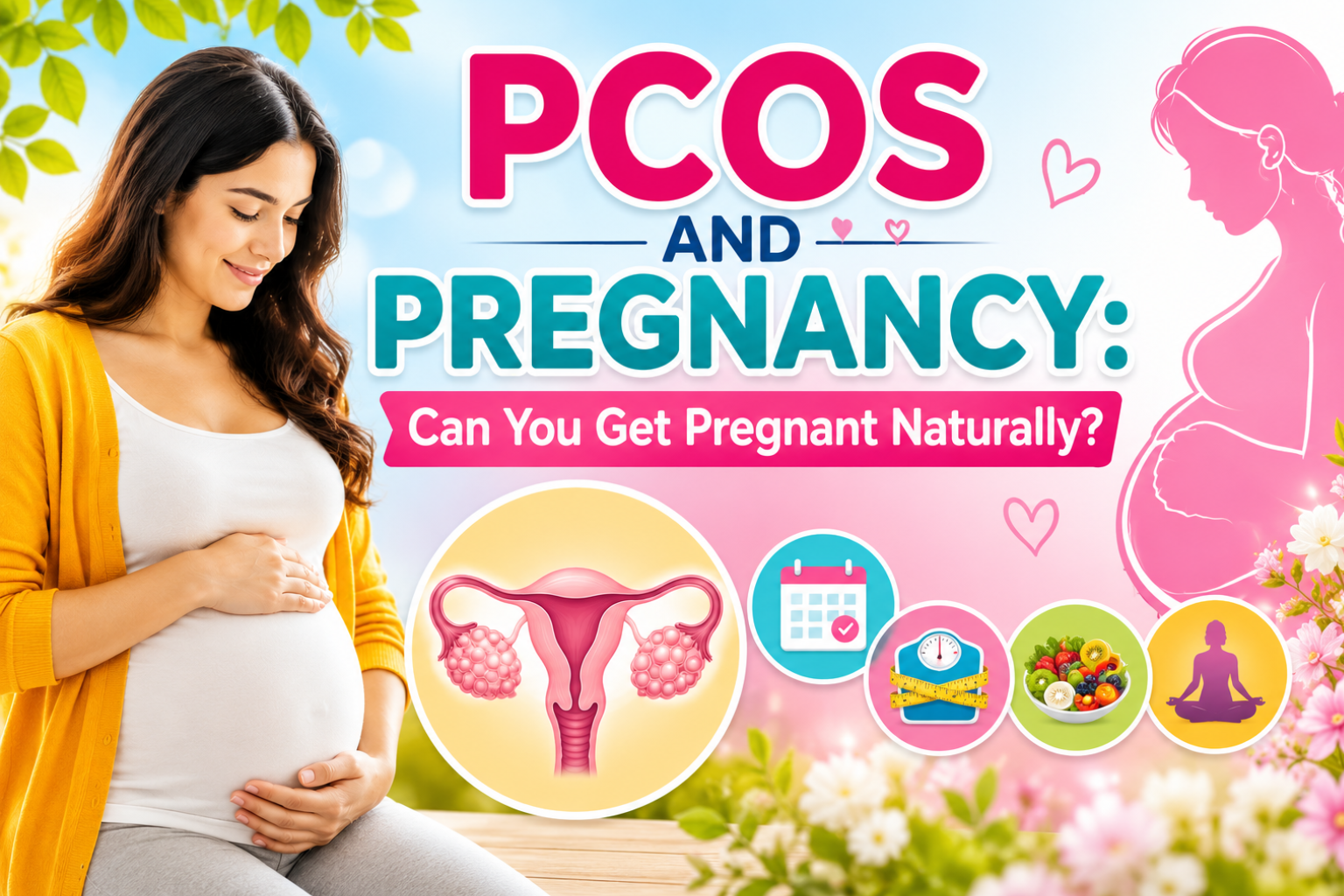
PCOS and Pregnancy: Can You Get Pregnant Naturally with PCOS?

Polycystic Ovary Syndrome — PCOS — is the most common hormonal condition affecting women of reproductive age in India, and it is the leading cause of ovulatory infertility. If you have been diagnosed with PCOS and are hoping to get pregnant, you are not alone — and importantly, you have real, effective options.

Dr. Durga Vytla, a fertility specialist based in Gachibowli, Hyderabad, works with PCOS patients every day. This guide covers everything you need to know — from how PCOS affects fertility, to what treatments work, to when IVF becomes the right step.


What Is PCOS and How Common Is It?

PCOS is a hormonal disorder in which the ovaries produce excess androgens (male hormones) and fail to release eggs regularly. Instead of a single dominant follicle maturing and releasing an egg each month, multiple small follicles develop but none fully matures — leading to irregular or absent ovulation.

In India, PCOS is estimated to affect between 10 and 20 percent of women of reproductive age. Among women presenting to fertility clinics in cities like Hyderabad, the proportion is even higher. It is also the condition most commonly associated with irregular periods, excess hair growth, acne, and weight gain around the abdomen.


Does PCOS Mean You Cannot Get Pregnant?

No — and this is the most important thing to understand. PCOS does not mean infertility. It means irregular ovulation, and irregular ovulation is treatable.

Many women with PCOS do get pregnant naturally — especially those with mild symptoms, healthy weight, and no other fertility factors. However, the unpredictability of ovulation makes it harder to time intercourse and reduces monthly conception chances. For women who are actively trying to conceive without success, medical support to restore regular ovulation significantly improves the outlook.


How Does PCOS Affect Your Chances of Getting Pregnant?

1. Irregular or Absent Ovulation

Without regular ovulation, there are fewer opportunities each year for an egg to be fertilised. A woman who ovulates 12 times a year has 12 chances at conception. A woman with PCOS may ovulate only 3 to 6 times a year — cutting the natural conception window significantly.

2. Hormonal Imbalance

Elevated LH (Luteinising Hormone) relative to FSH (Follicle Stimulating Hormone) is a hallmark of PCOS. This imbalance can affect egg quality and the uterine lining's readiness to receive an embryo — even when ovulation does occur.

3. Insulin Resistance

Up to 70 percent of women with PCOS have some degree of insulin resistance, which disrupts the hormonal signals that regulate ovulation. Insulin resistance also increases the risk of gestational diabetes during pregnancy — meaning monitoring during pregnancy is important even after conception.

4. Higher Miscarriage Risk

Some studies suggest that women with PCOS have a slightly elevated risk of early miscarriage, particularly when insulin resistance and elevated LH levels are uncontrolled. Managing these factors before and during early pregnancy is part of comprehensive PCOS fertility care.


PCOS Fertility Treatment Options in Hyderabad

Lifestyle Modification — The First Line

For women with PCOS who are overweight, even a 5 to 10 percent reduction in body weight can restore spontaneous ovulation and significantly improve fertility outcomes. Lifestyle changes — including a low glycaemic index diet, regular moderate exercise, and stress management — are not just supplementary advice. They are clinically proven first-line interventions that can result in natural pregnancy without any medication.

Ovulation Induction with Letrozole or Clomiphene

When lifestyle changes alone are insufficient, ovulation induction is the next step. Medications like Letrozole (preferred for PCOS) or Clomiphene Citrate are used to stimulate the ovaries to produce and release a single, mature egg. These are taken orally for 5 days at the start of the cycle and are monitored with ultrasound scans to confirm follicle development and ovulation.

Ovulation induction is often combined with timed intercourse (OI-TI) or Intrauterine Insemination (IUI). Success rates with ovulation induction range from 15 to 25 percent per cycle, depending on the woman's age and other factors.

IUI — Intrauterine Insemination

IUI is a simple procedure in which processed sperm is placed directly into the uterus around the time of ovulation, increasing the number of sperm that reach the egg. It is appropriate for PCOS patients who respond well to ovulation induction but have not conceived after several cycles of timed intercourse. Dr. Durga Vytla typically recommends 3 cycles of IUI before reassessing the treatment plan.

IVF for PCOS

IVF is recommended for PCOS patients when ovulation induction has failed, when there are additional fertility factors (such as tube problems or male factor), or when the patient is above 35 and time is a consideration. Women with PCOS actually tend to respond well to IVF stimulation — producing a good number of eggs — though they need careful monitoring to avoid Ovarian Hyperstimulation Syndrome (OHSS).

Dr. Durga Vytla uses a tailored stimulation protocol for PCOS patients undergoing IVF, using low and slow dosing strategies with frequent monitoring to maximise egg quality while minimising OHSS risk. A freeze-all strategy — freezing all embryos and doing a frozen embryo transfer in a subsequent cycle — is often recommended for PCOS patients to eliminate the OHSS risk entirely.


PCOS and IVF Success Rates in Hyderabad

Women with PCOS generally have IVF success rates comparable to or higher than the general infertile population for their age group, because ovarian reserve is typically well-maintained. The primary challenge is not egg number but egg quality and cycle management. With experienced fertility care in Hyderabad, good outcomes are very achievable — particularly for women under 35.


What Should You Do If You Have PCOS and Want to Get Pregnant?

  •       See a fertility specialist — not just a gynaecologist — for a targeted PCOS fertility evaluation
  •       Get a hormone panel done on Day 2 or 3 of your cycle: FSH, LH, AMH, Prolactin, Testosterone, Thyroid
  •       Get a pelvic ultrasound to assess ovarian morphology and antral follicle count
  •       Ask your partner to get a semen analysis done — male factor can coexist with PCOS
  •       Start lifestyle modifications immediately — these improve every fertility treatment outcome
  •       Do not delay beyond 6 to 12 months of trying without results — time matters

Book a Consultation

If you have PCOS and are trying to conceive in Hyderabad, book a consultation with Dr. Durga Vytla in Gachibowli. A personalised evaluation is the first step toward a clear, actionable plan.

Frequently Asked Questions

IVF Cost in Hyderabad 2026 — A Complete, Transparent Breakdown

If you are researching IVF in Hyderabad, the first question on your mind is almost certainly: how much will this cost? You have probably already seen wildly different numbers across different clinic websites and that confusion is frustrating when you are trying to make one of the most important decisions of your life.

This guide, written by Dr. Durga Vytla, a fertility specialist based in Gachibowli, Hyderabad, gives you a fully transparent, up-to-date breakdown of IVF costs for 2026 including what is typically included, what is not, and what questions you must ask before you commit to a clinic.

Why Does IVF Cost Vary So Much in Hyderabad?

The short answer: because IVF is not one procedure. It is a series of personalised medical steps that differ from patient to patient based on age, diagnosis, medication response, and whether additional procedures like ICSI or PGT are needed. A quote that does not account for your specific situation is not an accurate quote — it is a starting number.

In Hyderabad, IVF costs in 2026 vary depending on:

  •       The clinic's infrastructure and laboratory quality
  •       The doctor's experience and specialisation
  •       Whether medications are included in the package or billed separately
  •       The area of Hyderabad — clinics in Gachibowli and the Financial District may be priced differently than peripheral areas
  •       Add-on procedures like ICSI, PGT, embryo freezing, or ERA testing

IVF Base Cost in Hyderabad 2026 — What You Can Expect

A standard, single IVF cycle in Hyderabad in 2026 — including consultation, ovarian stimulation monitoring scans, egg retrieval under anaesthesia, embryo culture, and embryo transfer — typically ranges anywhere from Rs. 1,30,000 to Rs. 1,90,000, depending on the clinic and individual protocol.

This base figure usually covers:

  •       Initial fertility evaluation and pre-IVF tests
  •       Ovarian stimulation monitoring (blood tests + ultrasound scans)
  •       Egg retrieval procedure and anaesthesia
  •       Embryo culture for up to 5 days in the laboratory
  •       Embryo transfer
  •       Pregnancy blood test (beta-HCG) at 14 days

What is typically NOT included in the base package:

  •       Hormonal stimulation medications (which can cost roughly Rs. 40,000 to Rs. 80,000 extra depending on your ovarian response)
  •       ICSI — if sperm quality requires it (roughly Rs. 10,000 to Rs. 20,000 additional)
  •       Embryo freezing and storage (approximately Rs. 10,000 to Rs. 30,000 per year)
  •       Preimplantation Genetic Testing — PGT-A or PGT-M (roughly Rs. 28,000 to Rs. 65,000, depending on the number of embryos tested)
  •       ERA test for repeated implantation failure (approximately Rs. 40,000 to Rs. 60,000)

IUI Cost in Hyderabad 2026

Intrauterine insemination (IUI) is a simpler, less invasive treatment that may be recommended before IVF in certain cases. A single IUI cycle in Hyderabad in 2026 typically costs somewhere in the range of Rs. 7,000 to Rs. 15,000, excluding medications. It is considerably more affordable, though success rates per cycle are lower. Dr. Durga Vytla recommends IUI for specific indications and typically advises up to 3 cycles before reassessing the treatment plan.

ICSI Cost in Hyderabad 2026

Intracytoplasmic Sperm Injection (ICSI) is a specialised form of IVF where a single sperm is injected directly into each egg. It is recommended when semen analysis shows low sperm count, poor motility, or abnormal morphology. ICSI typically adds somewhere between Rs. 10,000 and Rs. 20,000 to the cost of an IVF cycle in Hyderabad. It is not an upgrade — it is a medically indicated procedure for specific male factor cases.

Frozen Embryo Transfer (FET) Cost in Hyderabad 2026

If you have frozen embryos from a previous IVF cycle and are planning a Frozen Embryo Transfer (FET), the cost is significantly lower than a fresh cycle. A medicated FET in Hyderabad in 2026 typically falls somewhere between Rs. 40,000 and Rs. 55,000, excluding medications. This is because there is no fresh egg retrieval involved — only uterine preparation and embryo thaw and transfer.

Egg Freezing Cost in Hyderabad 2026

Women who wish to preserve their fertility — for career, health, or personal reasons — can opt for egg freezing (oocyte cryopreservation). This involves one IVF cycle up to the egg retrieval stage. The cost in Hyderabad in 2026 generally falls somewhere between Rs. 75,000 and Rs. 1,30,000 for the cycle, plus roughly Rs. 10,000 to Rs. 30,000 per year for storage.

Donor Egg IVF Cost in Hyderabad 2026

For women with very low ovarian reserve, premature ovarian insufficiency, or poor response to stimulation, donor egg IVF may be recommended. In Hyderabad, a donor egg IVF cycle in 2026 typically falls somewhere in the range of Rs. 2,70,000 to Rs. 3,90,000, covering the recipient's cycle, donor compensation, and medical screening. This is more expensive than self-cycle IVF but success rates are significantly higher for appropriate candidates.

How Many IVF Cycles Will You Need?

This is the question clinics often avoid answering directly — but it matters enormously for your total budget planning. The truth is that not every couple achieves pregnancy in the first IVF cycle. The number of cycles required depends on:

  •       The woman's age and ovarian reserve
  •       The quality of embryos produced
  •       The underlying cause of infertility
  •       Whether genetic testing is used to select the best embryo

Statistically, a significant proportion of couples need 1 to 2 cycles before achieving a live birth. Budget for at least two cycles when planning, and ask your fertility specialist for a personalised prognosis at your consultation.

Does Insurance Cover IVF in Hyderabad?

As of 2026, most standard health insurance policies in India do not cover IVF treatment. However, several group health policies offered by employers have begun including fertility benefits, and some individual plans now offer riders for fertility treatment. It is strongly recommended to check your existing policy and ask your insurer directly. Some clinics, including practices in Gachibowli, offer structured EMI payment plans to make treatment more accessible.

What to Ask Before You Pay for IVF in Hyderabad

Dr. Durga Vytla advises every patient to ask these specific questions before agreeing to any IVF package:

  •       Is the cost per cycle or per embryo transfer? (These are different)
  •       Are stimulation medications included or billed separately?
  •       What happens if my cycle is cancelled due to poor ovarian response — do I pay the full amount?
  •       What is the cost of embryo freezing and how long is storage included?
  •       Is there a multi-cycle package that reduces per-cycle cost?
  •       What are your success rates for my age group specifically?

Why Choose Dr. Durga Vytla for IVF in Hyderabad?

Dr. Durga Vytla is a specialist in fertility and reproductive medicine based in Gachibowli, Hyderabad. With a practice focused entirely on IVF, IUI, ICSI, egg freezing, and the management of complex fertility conditions, Dr. Vytla is known for her patient-first approach — clear communication, transparent pricing, and personalised treatment plans that do not follow a one-size-fits-all model.

Patients from across Hyderabad — including Nallagandla ,Tellapur , Manikonda , Kokapet , Kondapur, Madhapur, Film Nagar and  Lingampally — consult Dr. Durga Vytla for a fertility evaluation before making any treatment decisions. The first step is always a thorough assessment of both partners, not a prescription.

Book a Consultation

If you are considering IVF and want to understand the exact costs that apply to your situation, book a consultation with Dr. Durga Vytla in Gachibowli, Hyderabad. Every couple's case is different — the right cost estimate starts with the right evaluation.

Frequently Asked Questions