
Tubal Recanalization: A Fertility-Sparing Option for Blocked Tubes
When a fallopian tube blockage is diagnosed, the conversation often jumps straight to IVF, and for many patients that's genuinely the right recommendation. But for a specific subset of blockages, there's a less-discussed option worth knowing about first: tubal recanalization, a procedure aimed at reopening the tube itself rather than bypassing it entirely.
What Tubal Recanalization Actually Is
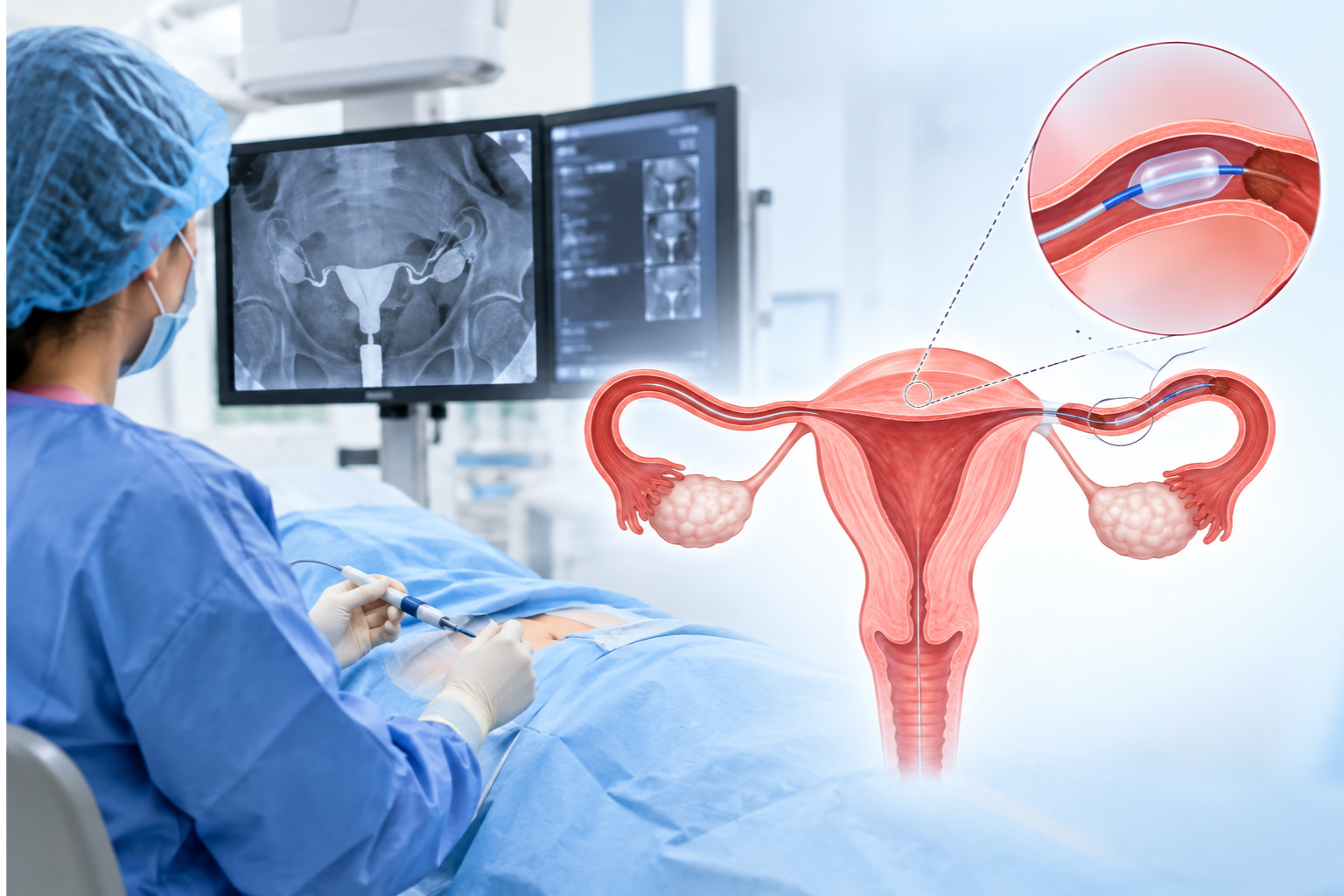
Tubal recanalization is a procedure that attempts to clear a blockage at the point where the fallopian tube connects to the uterus — the proximal portion of the tube, closest to the uterine cavity. Using a thin catheter guided through the cervix and uterus, often under X-ray or hysteroscopic guidance, the blockage at this specific junction is cleared, aiming to restore an open pathway through the tube.
Why This Only Works for a Specific Type of Blockage
This is the most important thing to understand before getting hopeful or dismissive about this option: tubal recanalization is specifically effective for proximal blockages — those at the junction near the uterus — and isn't a treatment for blockages further along the tube, near the ovarian end, or for a tube that's severely damaged, scarred, or converted into a hydrosalpinx (a fluid-filled, dilated tube). Diagnostic imaging, usually a hysterosalpingogram, needs to clearly identify the blockage as proximal before this procedure makes sense as an option at all.
Who Tends to Be a Good Candidate
Tubal recanalization is worth discussing specifically for:
- Women with a confirmed proximal tubal blockage and otherwise reasonably normal fertility factors
- Cases where the blockage appears to be due to mucus plugging, debris, or mild scarring rather than extensive structural damage
- Patients who would prefer to attempt natural conception before or alongside considering IVF
- Situations where the rest of the tube, beyond the blockage point, appears structurally normal on imaging
What It Doesn't Fix
It's worth being direct about the limitations. Tubal recanalization doesn't address damage to the far end of the tube, doesn't help with a hydrosalpinx, and doesn't restore function to a tube with extensive scarring beyond the immediate blockage point. It also doesn't address other fertility factors that might coexist with the blockage — ovulation issues, sperm quality, or uterine factors are separate considerations evaluated independently.
What the Procedure Involves
The procedure is typically done as an outpatient or day-care procedure, often without general anaesthesia, using imaging guidance to precisely locate and clear the blockage. Recovery is generally quick, with most patients resuming normal activity within a day or two.
What Happens After the Procedure
Success is generally assessed by confirming the tube is open, either immediately during the procedure or via follow-up imaging. Even when the tube is successfully reopened, this restores the possibility of natural conception — it doesn't guarantee pregnancy, since the tube being open is one necessary factor among several (ovulation, sperm quality, and uterine receptivity still all need to align). Pregnancy rates following successful recanalization vary depending on the underlying cause of the original blockage and other fertility factors present.
Why This Isn't Automatically Offered
Not every fertility centre routinely offers or discusses this procedure, partly because it applies to a narrower set of cases than blocked tubes in general, and partly because moving directly to IVF, which works regardless of tubal status, is a more universally applicable recommendation. That doesn't make it the wrong recommendation for a specific patient with a genuinely proximal, otherwise-uncomplicated blockage — it just means it's worth specifically asking about rather than assuming it's not relevant.
How to Know If It's Right for You
If you've been told you have a blocked fallopian tube, the useful next question is specifically where the blockage is located and what the rest of the tube looks like on imaging — not just that a blockage exists. That detail is what determines whether tubal recanalization is a genuine option worth pursuing before or alongside other fertility treatment, or whether it wouldn't meaningfully help in your specific case.
Frequently Asked Questions
For many patients, yes, though recurrence of blockage is possible, particularly if the underlying cause (such as prior infection or endometriosis) isn't otherwise addressed or continues to be active.
Many specialists suggest waiting through one full menstrual cycle after the procedure to allow healing before actively trying, though this can vary based on individual circumstances.
Yes, an unsuccessful recanalization attempt doesn't affect your ability to pursue IVF afterward — it's not a treatment that closes off other options.
Coverage varies by insurer and policy. It's worth checking directly with your insurer using the specific procedure code, since it's a defined, catalogued procedure rather than an experimental one.
